Glass or Ceramic Water Carafe: Which Suits Your Table?
Compare a glass or ceramic water carafe by visibility, weight, cleaning and serving feel to choose the one that fits your table and daily habits.
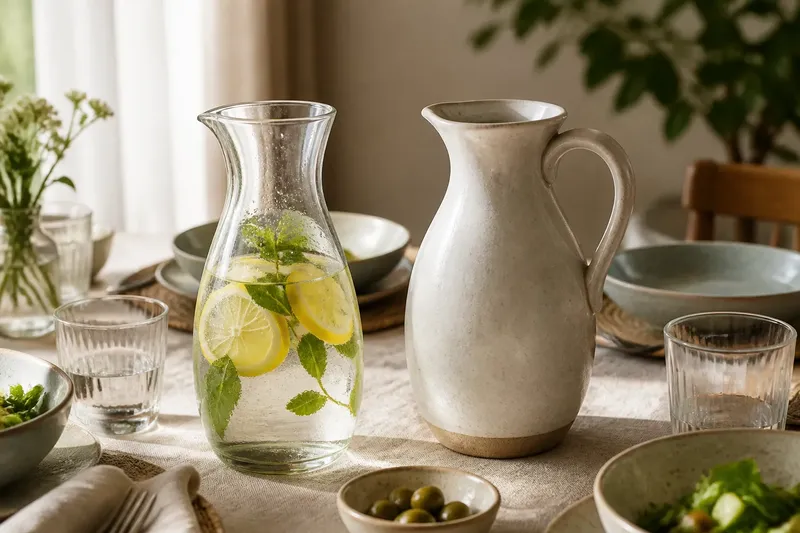
A glass or ceramic water carafe changes how easily you can see the water, lift the vessel and judge what is left. The choice is less about which material is inherently better than about what you want the carafe to do at your table: disappear into the meal, or take a visible place in it.
What do you want to notice at the table?
Glass makes its contents part of the scene. You can see the water level at a glance, notice a lemon slice or sprig of mint, and tell whether the carafe needs topping up. That transparency can make a plain vessel feel light on a crowded table. It also shows fingerprints, water marks and anything that has settled inside.
Ceramic keeps the contents private. A glazed carafe may bring colour, texture or a calm block of white to the table, while hiding the waterline and any garnish. That can be useful if you prefer a composed setting without visible contents, but someone will need to lift or tilt the vessel to check how much remains.
Consider the whole meal rather than the empty carafe on a shelf. Clear glass can sit quietly beside patterned plates; a coloured ceramic piece can become an accent among simple crockery. Neither effect is permanent, of course. The water gets consumed, and the table has other plans.
How much does weight matter?
A glass carafe can feel easy to pick up when empty, but its weight changes as it fills. Thin glass is often less bulky in the hand than a thick-walled vessel, though it may feel more delicate. A ceramic carafe has a solid, opaque body, and its overall heft depends on its shape and construction. The same amount of water can therefore feel more substantial in one vessel than another.
Look at the handle, if there is one, and the shape of the neck. A broad handle may give a secure grip, while a narrow neck can make pouring awkward for someone with limited hand strength. A carafe without a handle may suit a confident two-handed lift but feel less accommodating when the table is crowded. If possible, hold the empty vessel in a shop; then imagine the added weight of the water.
Say you are choosing a carafe for a small dining table where guests pass it across one another. A clear, moderately sized glass vessel might make the remaining water easy to judge, but a ceramic carafe with a broad handle might be simpler to grip and less visually busy. The useful choice depends on who will pour and how the vessel will move around that particular table.
Which material is easier to clean?
Both materials can be straightforward to wash when their openings are broad and their interiors are smooth. A narrow neck makes it harder to reach the base, regardless of whether the carafe is glass or ceramic. Before buying, check whether a bottle brush can pass through the opening and reach the inside corners.
Glass lets you see residue, cloudy marks or a missed patch of soap. That visibility is helpful, but it also means dried droplets and fingerprints remain in view. A quick rinse may not be enough to leave clear glass looking clean, particularly after it has stood on a table under bright light.
Glazed ceramic conceals the waterline and most interior marks from the outside. Its finish can be easy to wipe, but the opaque body makes it harder to inspect the inside without looking through the opening. Unglazed surfaces, narrow spouts and decorative grooves may need more attention than a smooth glazed interior.
Check the maker’s care instructions for dishwasher use and any restrictions on hot water or abrasive cleaners; glazes and finishes vary. For ordinary water service, a rinse and a wash with washing-up liquid are usually the relevant routine. If the carafe has held flavoured water, wash it promptly so that citrus or herbs do not leave an unwanted trace for the next serving.
What changes when you serve from it?
Glass makes the act of pouring visible. A clear body can help you judge the water level before lifting, and the contents can lend a little colour to the table. But a wet exterior or a few fingerprints are hard to hide, so glass tends to reward a quick wipe before guests arrive.
Ceramic shifts attention towards the vessel’s silhouette and finish. It can feel more like a serving piece than a container, particularly beside matching bowls or plates. The water itself is less prominent, and the opaque body can make a simple pour feel more deliberate. That impression comes from the setting and the object together, not from the material doing anything mysterious to the water.
Think about the spout as carefully as the body. A well-shaped lip directs the pour; a broad rim may let water run down the side if the vessel is tipped too quickly. Carafes without lids can also collect dust or pick up nearby aromas while standing out. If you want to cover the water, look for a fitted lid or a design whose opening can take one securely.
Which water carafe questions matter before buying?
Does glass or ceramic keep water cooler?
The material alone is not a dependable guide to how long water stays cool; the carafe’s shape, thickness and surroundings also matter. If temperature matters, chill the water separately and serve it promptly rather than choosing by appearance alone.
Can a ceramic carafe go in the dishwasher?
Some can, while others have finishes or details that call for handwashing. Check the care label or manufacturer’s instructions for the particular carafe rather than assuming that all glazed ceramic is treated alike.
Is glass easier to inspect for cleanliness?
Yes: transparency makes water marks and visible residue easier to spot. A broad opening still matters, since seeing the inside is not the same as being able to reach it with a cloth or brush.
Which material suits water with fruit or herbs?
Glass displays slices and leaves, which can help guests see what has been added. Ceramic hides them, so it may suit a quieter look, but its opening still needs to be wide enough to remove the ingredients and wash the interior.
How do you decide between them?
Start with the routine, then compare the vessel’s shape and finish. A glass carafe is a natural fit if you value a visible waterline, like showing fruit or herbs, and do not mind wiping marks from the outside. Ceramic may suit you better if you prefer colour or texture, want the water itself out of sight, or like a heavier-looking centrepiece.
- Choose glass if seeing the water level at a glance is useful.
- Choose ceramic if an opaque, more decorative presence suits your table.
- Check the grip by considering the filled weight, handle and neck shape.
- Inspect the opening to make sure a brush can reach the interior.
- Read the care label before relying on a dishwasher or a particular cleaning method.
The best glass or ceramic water carafe is the one that fits the way water is actually served in your home. If visibility and easy level-checking matter most, choose clear glass with a comfortable grip and an accessible opening. If you want a vessel that contributes colour and keeps the contents out of view, choose glazed ceramic with a shape you can pour from easily. The material sets the mood; the opening, handle and care requirements decide whether you will keep reaching for it.